
Walking Under Burnt Sienna Skies
Christopher DiLeonardo, Ph.D - Senior Contributing Editor
"You are the sky. Everything else—it’s just the weather."
— Pema Chödrön
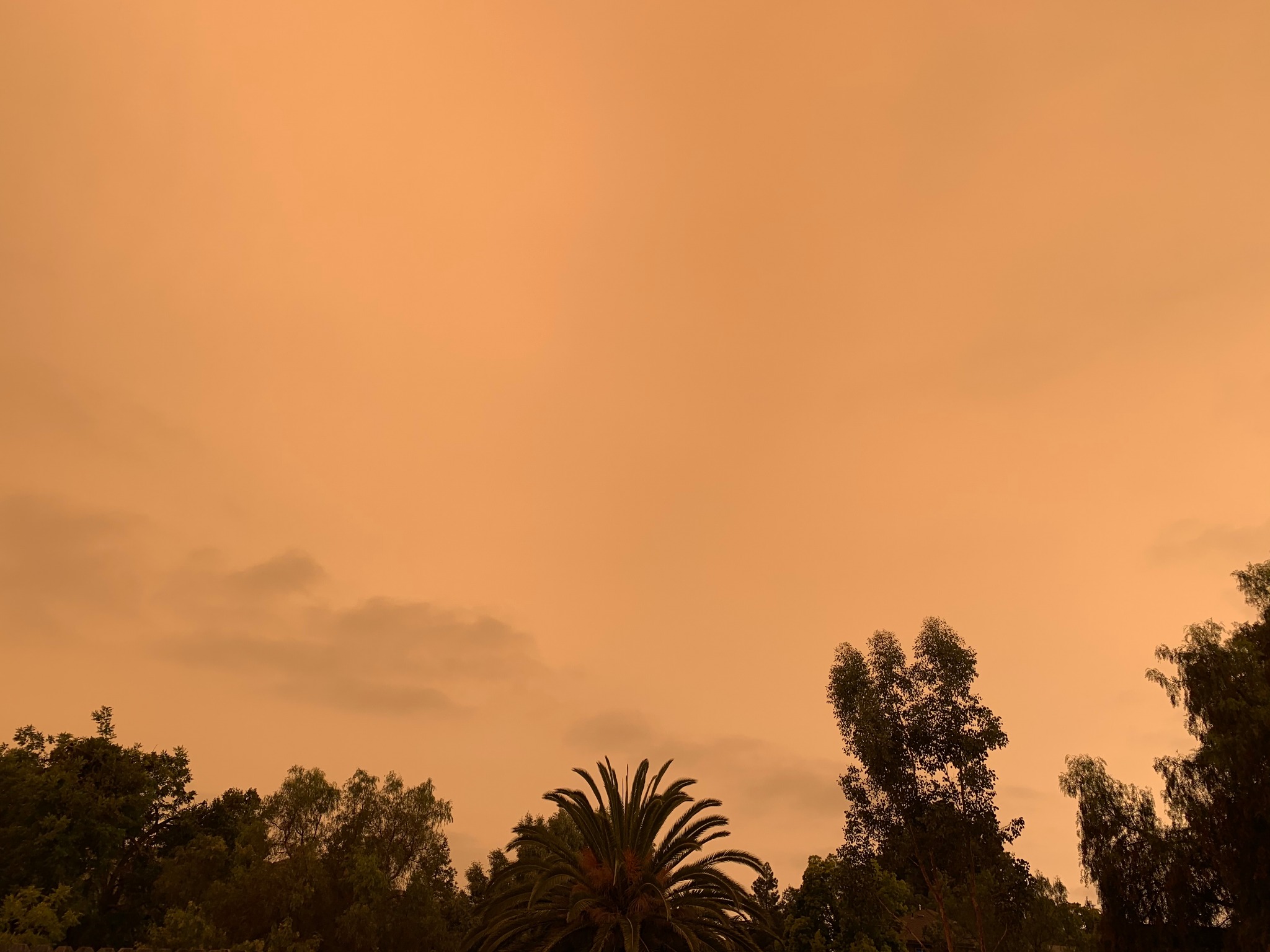
The skies were a deep burnt sienna, and tiny grey ash filtered out of the clouds like snowflakes on an early winter morning. The ash provided a layer of dust on my jeep, parked in front of my home. This ashfall was the remnants of some not-too-distant wildfire, the remains of a forest, field, or home. Smoke was everywhere and hugging the ground as if an early morning fog, except it wasn’t. The term unhealthy air, doesn’t quite do it justice. But I needed to pick up my other vehicle from the body shop a couple of miles down the hill, and it gave me an excuse to get out and take the long way.
The long way involved hiking uphill first, then along the rural roads just above me. Fields mixed with vineyards and the easternmost Coast Range rising beyond that. So, with my mask on, which was there because of the global pandemic, but now filtering larger particles out of the air, I started down the driveway from my house.
I have walked many miles on this planet, journeys I’m sharing with you here. But this is different, not the recounting of some past hike up the cliffs above the Colorado River, or along the Amalfi Coast; this was local, and it was yesterday. Record heat had embraced the state of California and my home south of the Bay Area, an area noted for its mild climate. That unusual heat wave had been on us for a week, providing a record temperature of 130°F (54.4°C) in Death Valley. Locally, it was just oppressively hot. The unusual weather brought with it something else we almost never see, and certainly unprecedented at the scale we saw that night: a lightning storm. I don’t mean simply a storm with lightning. This was apocalyptic to us, who just don’t see such a thing on a regular basis, or ever in coastal California.
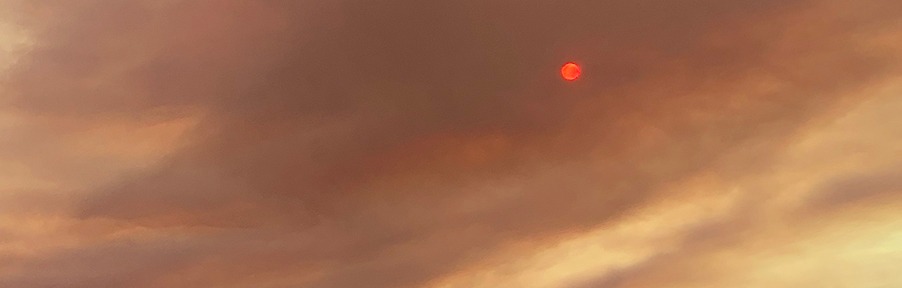
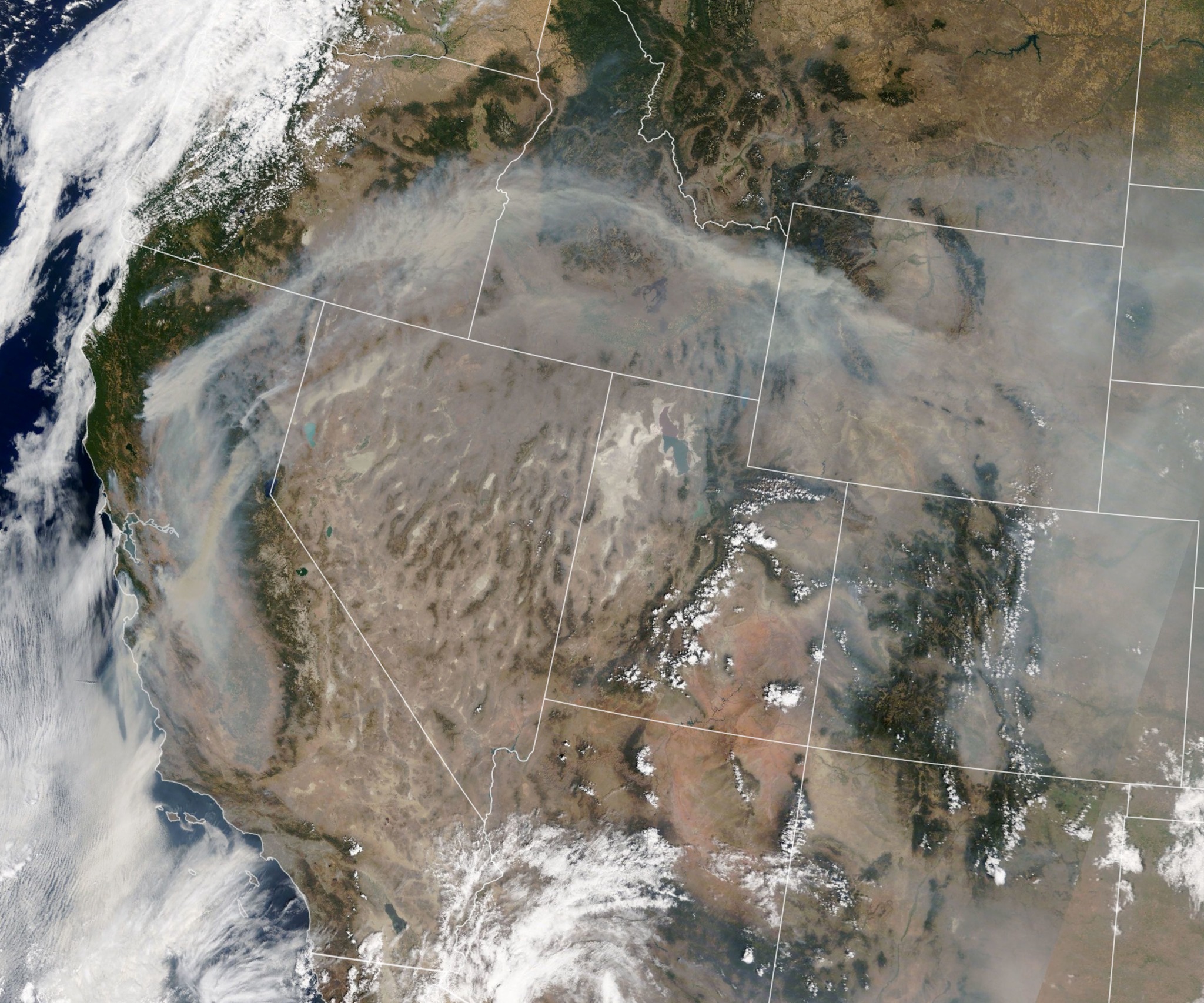
Thousands of lightning strikes occurred across California, setting ablaze tinder-dry forests and underbrush. They quickly merged into large fire complexes that moved quickly, encroaching on urban areas, homes, and lives. Thousands evacuated hurriedly, many in the night, as flames raced down stretches of landscape the local inhabitants had always thought relatively secure. For those of us who were luckier, we worried about others, friends, and loved ones who were forced to leave their homes. We also watched in horror as reports and pictures came in showing that once-favorite landscapes had been devastated. This included Big Basin State Park in the Santa Cruz Mountains.
Big Basin, home to redwood trees, rugged terrain, and waterfalls, was where I did some of my earliest hiking as a young man. I returned there many times over the years, including once with the young woman who would later become my wife. She wasn’t a hiker, instead a dancer and choreographer; she was in shape but not used to hiking. After a multi-hour hike, perhaps an hour longer than anticipated, she went on “strike.” She sat, feet up, on a downed tree trunk, along the trail, pulled her hoodie up over her head, and crossed her arms. She only moved when I explained to her, even here, you don’t want to be caught out after dark in the wild. We finished that hike, moving through some of the most spectacular redwood forests you will see in the California coastal mountains. Now much of it, scarred by fire, though the redwood forests themselves would survive.
Beyond our horror and disbelief as we walk masked from a pandemic and looking up into the brownish-red sky, it seems as if we are walking through the surreal dreamscape of some dystopian future. But this isn’t the future, it is now; and this is not a nightmare, it is the reality we created and now have to live with.
Of course, this was once a view of a dystopian future. Not simply one found as a prelude to a post-apocalyptic SciFi series on Netflix, but the predicted dystopian future of geoscientists in 1990. Impact predictions resulting from climate change were made for the decade leading into 2020. A brief, but not all-inclusive, list of those predictions include: 1) Increasing extreme temperature events globally in the summer months; 2) Acceleration of melting glacial and sea ice; 3) Rising sea level due to melting glaciers and thermal expansion of the surface mixed-layer of the oceans; 4) Extreme drought in some areas punctuated by occasional severe flooding events, 5) Rapid heating in the arctic causing bifurcation of the polar vortex bringing extreme winter cold, and storms into parts of North America, Europe and Asia; 6) Increase in frequency and energy of North Atlantic Hurricanes and tropical storms; 7) Unusual and unprecedented extreme weather events across the globe; and 8) Catastrophic wildfire seasons across the globe especially in the western United States and Australia. Not an inclusive list, but one that would sound all too familiar to anyone paying attention to the News, even Fox News.
Our own eyes can see what the last decade has brought us. In science, we test the veracity of our hypotheses, theories, models, and conclusions by prediction. In fact, the “experiment” which makes science what it is as a separate human endeavor, simply means a test by prediction. So, the test of our understanding of climate change is in full view to anyone. You just have to see what we are experiencing with open eyes. Climate change is not a political issue, it just “is.” A debate won or lost in the political arena or on social media doesn’t impact climate change at all. And if you are one of the few who are reading this and thinking somehow yes the weather over the last decade (even longer) has been “all messed up,” but I don’t know about “climate change,” you are a little confused. You see, climate simply means the average weather patterns, given seasonal variability, for a location, region, or the planet as a whole. So, by definition if you have sustained changes in the weather patterns over time… you have climate change.
And yes, some also say that this is somehow “natural variability” in the climate system. As we know, there is such a thing, and geoscientists have been studying it for much longer than the political rhetoric has. For me, my first exposure to the climate system was as an undergraduate in the geological sciences. I was fascinated by a visiting researcher and lecturer at the University of Southern California. He was part of a program that brought in visiting scholars for a week to give lectures, conduct graduate seminars, and visit with faculty and students. One day, the undergraduates had the opportunity to have lunch with him at a pub with a beer garden near the campus. To many, it simply meant free food and beer, but I was hoping to chat with him. Unfortunately, the table he was at was crowded, and I was relegated to a side table with a handful of other undergraduates, eating and drinking on the department’s dime.
Most of my table was left with the finishing of food, and the last drop of beer was gone. The event was breaking up when this renowned climate scientist approached and asked if he could sit down.
“Sorry we didn’t get a chance to chat before.” He was being gracious.
“That’s alright,” I offered, “you’ve been pretty popular.” I went on, “I really enjoyed your discussion on Milankovitch cycles, and other orbital mechanics with respect to the possibility of a coming ice age. Though I am a bit confused.”
“Oh? What confuses you?” He asked with more patience than actual curiosity.
“I read a pretty obscure paper a few weeks ago on the last glacial cycle, suggesting that an ice-free arctic ocean was necessary to fuel the development of ice sheets.”
Now he was curious. Obviously familiar with the paper but impressed that an undergraduate might have come across it and understood the implications. You see ice sheets require precipitation in the form of snowfall. In fact, winter snowfall has to exceed seasonal melting for glacial ice to form and sustain. There are areas above the arctic circle today that are simply too cold to snow. Yes, you read that right, the atmosphere’s ability to hold moisture is a function of temperature. The warmer the more water vapor it can hold. And that was the rub the geosciences understood glacial cycles in the northern hemisphere and had tied them somewhat to orbital mechanics and solar energy. The planet cooled and warmed in part because of a number of astronomical factors. Minor variance in orbit, wobble of the planet’s spin axis, precession like a top of the spin axis, and others contribute to the amount of solar energy that is distributed on the earth. All of which were pointing towards eventual cooling, but in order to form the large ice sheets in the northern hemisphere over Canada, Europe and Asia it would have to be warmer.
“That was an interesting paper and the right conclusion.” He said after smiling a bit.
“So, doesn’t it mean we need some kind of ‘hot trigger’ just before cooling to actually develop large ice sheets?” I asked with more confidence than was warranted I’m sure, but I was genuinely curious.
“We’re not exactly sure, though the data is overwhelming on larger cooling. Perhaps the end temperatures of the warm interglacial periods are more of a key than we know. There are a few people studying them and some current work showing rising temperatures in this most recent interglacial time. Some interesting work on carbon dioxide-induced temperature rise has been published.”
That was the first time I had heard of human-induced temperature rise, even though it had been recognized for decades before our discussion. He had asked me to consider coming to study with him after graduation, but I went in a different direction. But I remember that moment to this day. The entire scientific community studying climate was looking for signals (trends in data) that we were heading into a new glacial period. What they were finding instead was a second signal, human-induced temperature rise, due to increased atmospheric carbon dioxide.
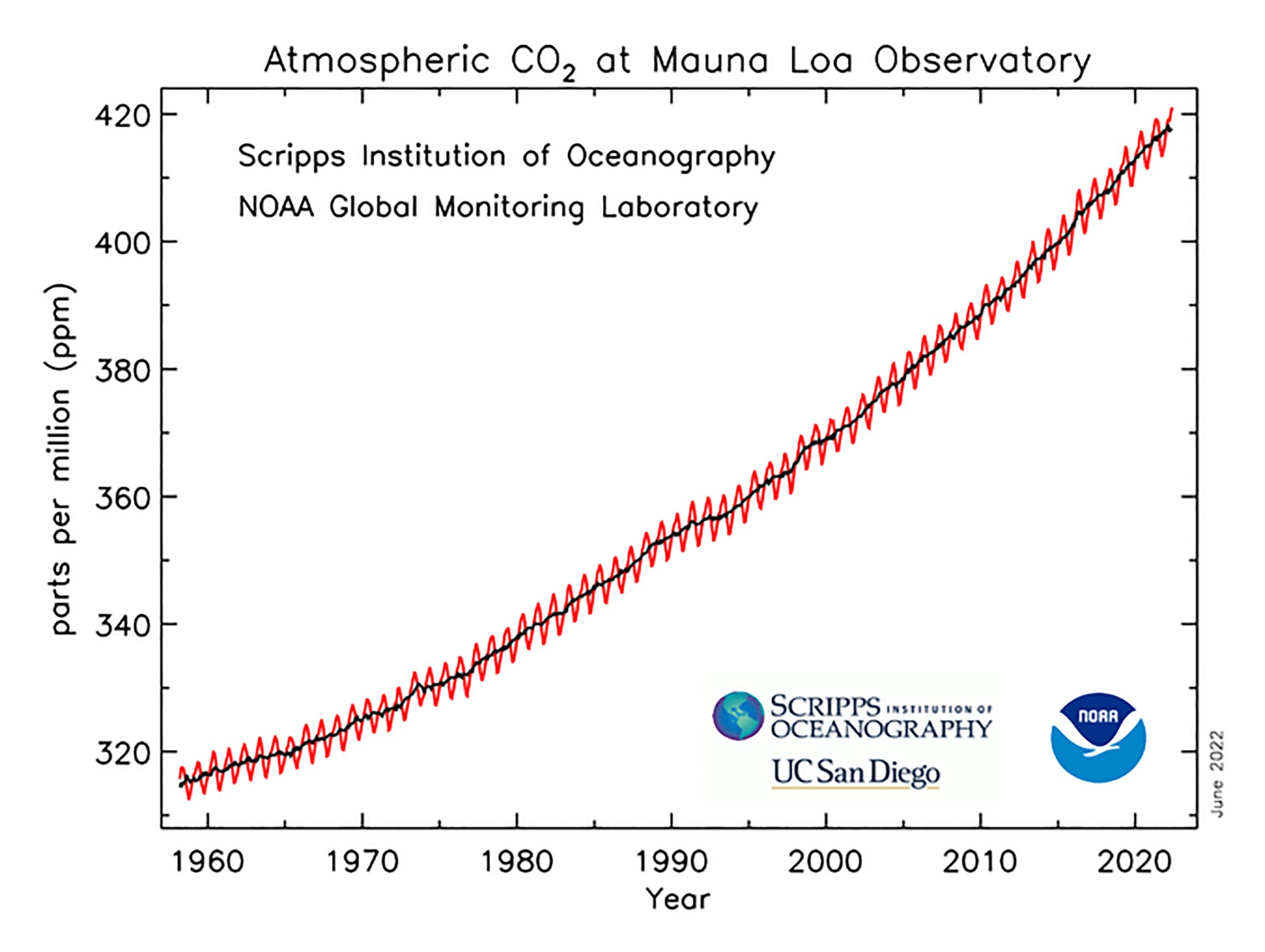
The increase in carbon dioxide on the planet had already been well documented by an experiment atop Mauna Loa in Hawaii. At the observatory, which is at about 14,000 feet above sea level and in the middle of the Pacific, atmospheric Carbon dioxide observations began in 1957. That was the International Geophysical Year (IGY), in which countries around the world agreed to devote expertise and collaborate to understand our home planet. It generated several international scientific initiatives in the earth sciences and culminated with the Soviet Union launching Sputnik, the first artificial satellite orbiting the Earth, in October. It was also our first step in understanding the role humans were playing in the planet’s climate.
I am always a bit amused when I hear a right-leaning political pundit say something like this is all about natural variability, or worse, slam the geosciences by saying how we used to be looking for the next ice age. That latter comment was always said with a well-timed chuckle, but unfortunately, it underscores the subject's ignorance by so many. It permeates right-wing media and politics, though, as I mentioned before, there is no politics to climate. I shouldn’t be able to predict what your view on climate change is by your answer to the question, “What bathroom should a transgender woman use?” But I can.
The right wing’s hold on climate change denial is fueled by the close tie between fossil fuel investment and conservative candidates. These candidates are already closely aligned with environmental regulations that limit environmental protections in favor of business interests. So mid-major and independent oil producers pump a lot of money into climate denial through campaign contributions and a number of well-funded “nonprofit political activist groups” specifically designed to promote climate change denial. These are then passed on to the large number of Americans who align themselves with conservative causes, who tack them onto a “complete” conservative agenda.
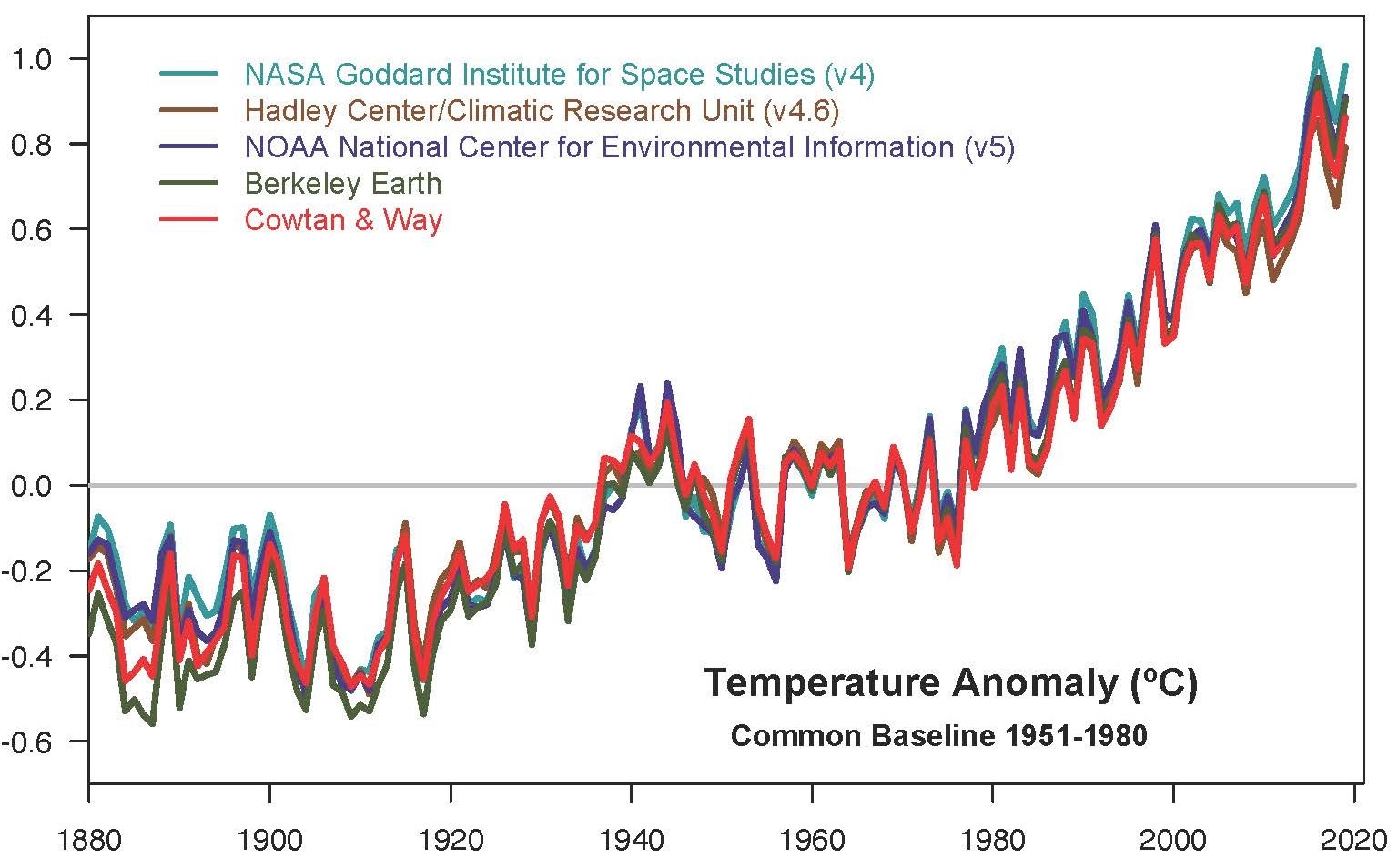
But climate isn’t a political beast and climate change is very real and demonstrable. This is especially true for farmers, ranchers, foresters and hunters who make up a big portion of the rank and file of the conservative base. They are tied to the land in ways that many others simply are not. So much so that my colleagues who are climate scientists will often consult farmers and ranchers on things like crop yields and changes to planting and grazing practices. This generational knowledge can go back many decades and track local climate fluctuations driven by broader global climate change. They know the truth of it, and are perhaps our best hope for bridging the political divide here. Whereas the monied oil and gas interests have much to gain in climate denial, the everyday rancher, grower, huntsman, and fisherman have almost everything to lose. At some point, they will realize that they are being used against their own best interest and will use their considerable political power to force bipartisan measures in the United States to take a global lead in fighting climate change.
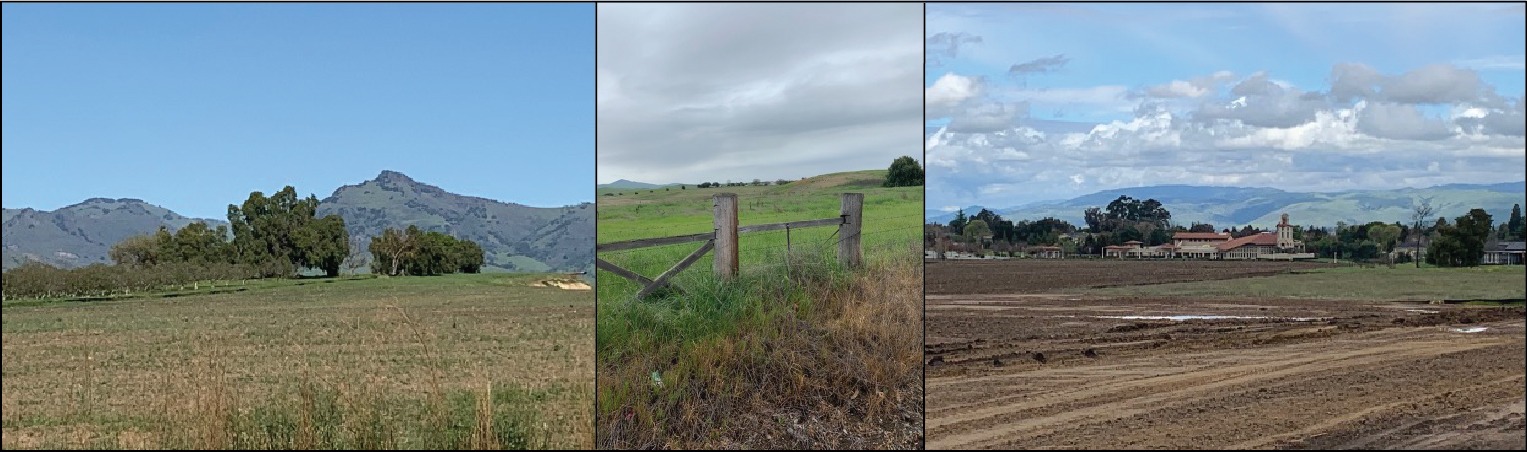
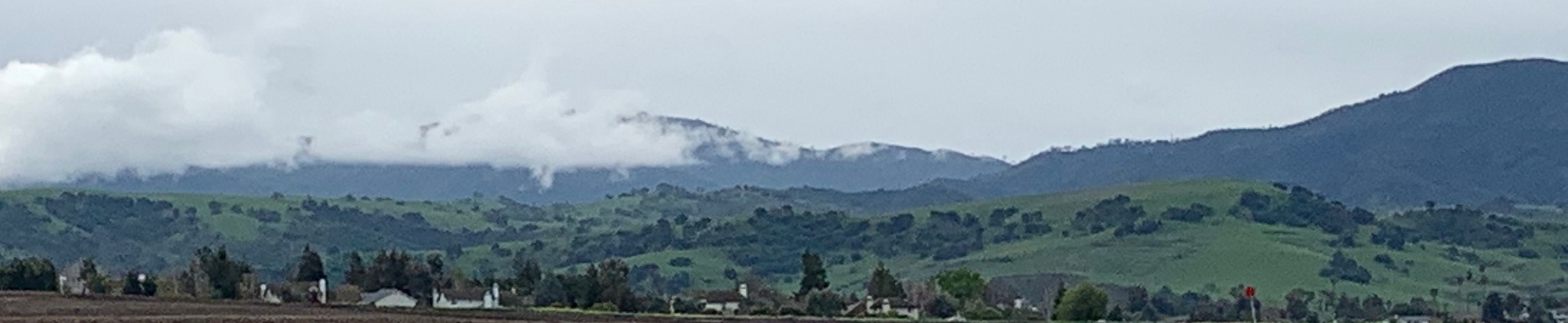
As I walked past the local fields of family farms on the way down the hill, I strained to see the mountains of the Coast Ranges to the west. The familiar view is not so familiar with a smoky false horizon blending to grey. The west will endure these fires, as did Australia, and, for the moment, so will Europe. But their increase in number and ferocity will be part of the dystopian future we have created for the moment and, in the end, fuel our resolve to manage the climate crisis for the future of our home world. Choices of course are in front of us, and all we need to do collectively is take one first step, followed by another… while Walking Planet Earth.
Christopher DiLeonardo, Ph.D. - Senior Contributing Editor
Christopher DiLeonardo, Ph.D., is an active field geoscientist, author, and educator who brings a lifetime of geological research and adventure to his work. As an avid adventurer, he has spent decades exploring and studying some of the planet’s most remote and scenic areas. Through his role as Senior Contributing Editor for Walking Planet Earth, Dr. DiLeonardo shares the stories, insights, and field experiences accumulated over his lifetime of exploration.
Copyright C. G. DiLeonardo, 2026

Post a comment